Groovy Flowers Illustration: A Vibrant Revival of Retro Art in Modern Design
In the ever-evolving world of digital art and design, one trend that continues to bloom brightly is the Groovy Flowers Illustration style. With its nostalgic charm, vivid color palette, and free-spirited aesthetic, this design approach is making a remarkable comeback across branding, fashion, packaging, and digital media. Groovy flower designs aren’t just about beautiful petals—they represent an era of creativity, positivity, and freedom that resonates strongly with today’s audience seeking authenticity and bold expression.
The Origins of Groovy Flower Art
To understand the essence of Groovy Flowers Illustration, it’s important to trace its roots back to the 1960s and 70s—decades defined by psychedelic art, hippie culture, and a movement toward self-expression. The “flower power” era introduced bold, swirling shapes and kaleidoscopic colors that reflected optimism, love, and unity. These designs were not just decoration—they symbolized peace and individuality.
Today, designers are breathing new life into this vintage aesthetic with modern tools and digital flair. By merging retro inspiration with contemporary design techniques, groovy floral illustrations have evolved into a versatile style that fits perfectly in modern branding, social media graphics, and product packaging.
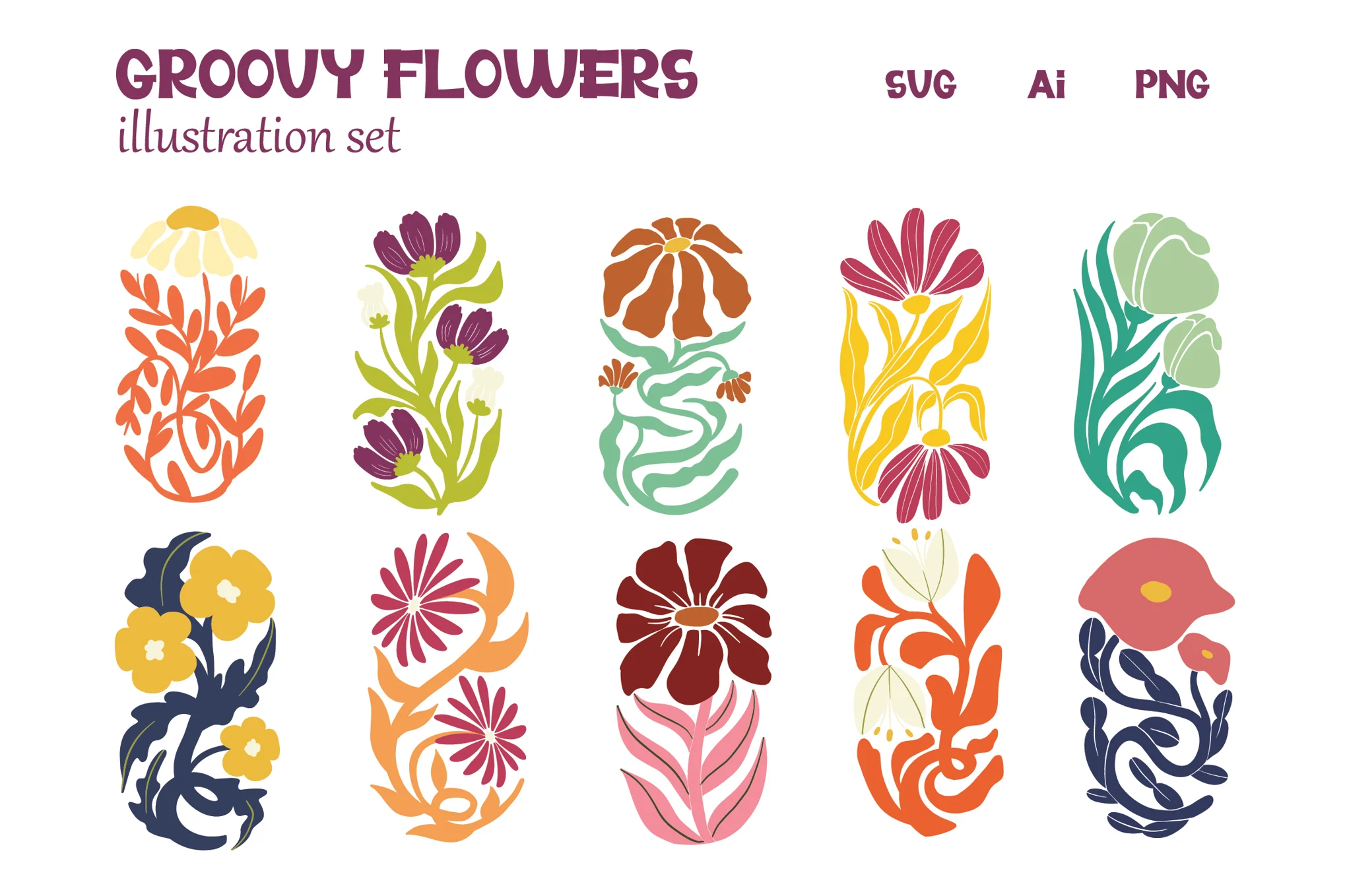
Groovy Flowers Illustration Set

Floral Groovy Box Illustration
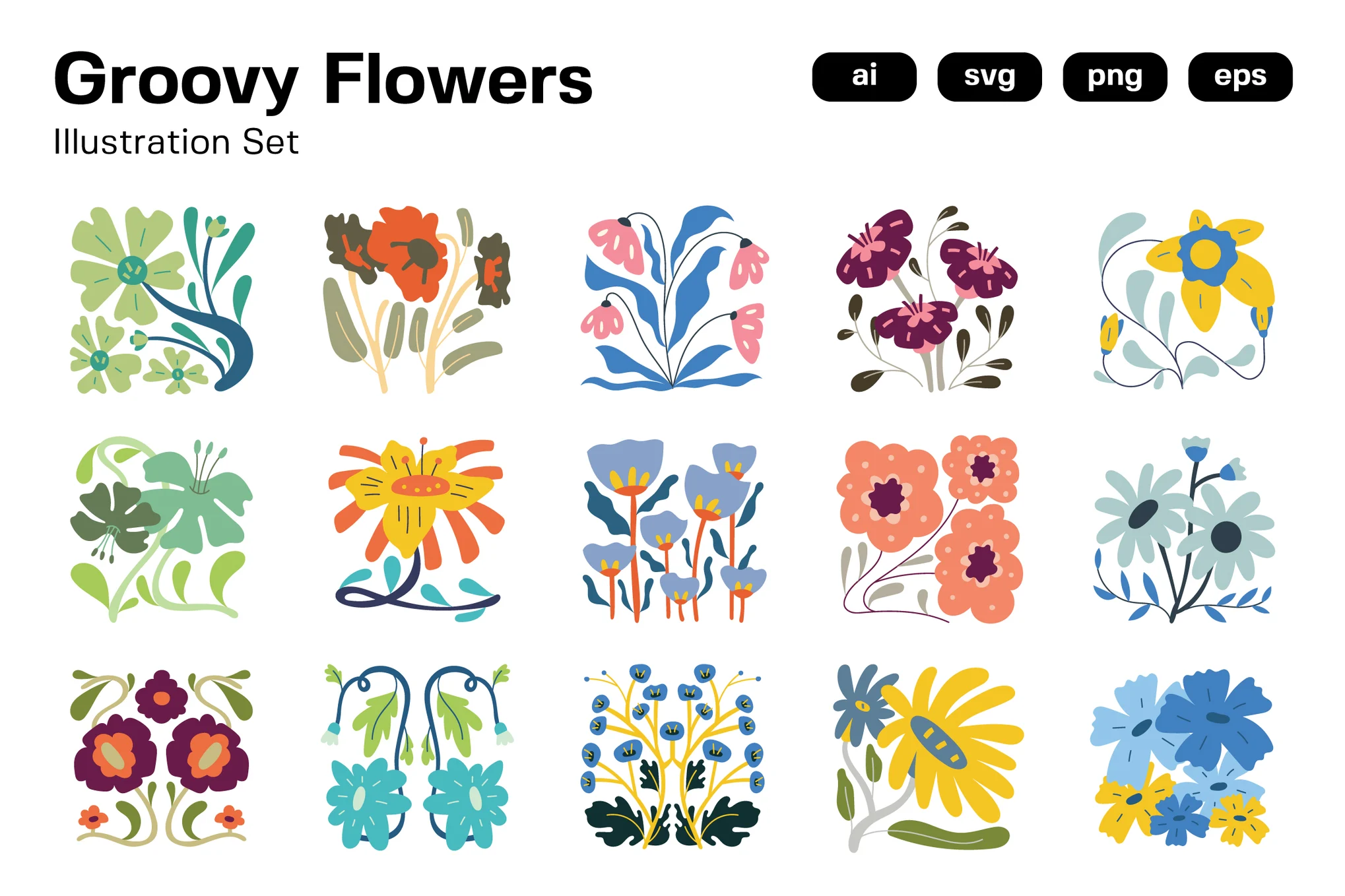
Groovy Flowers Illustrations
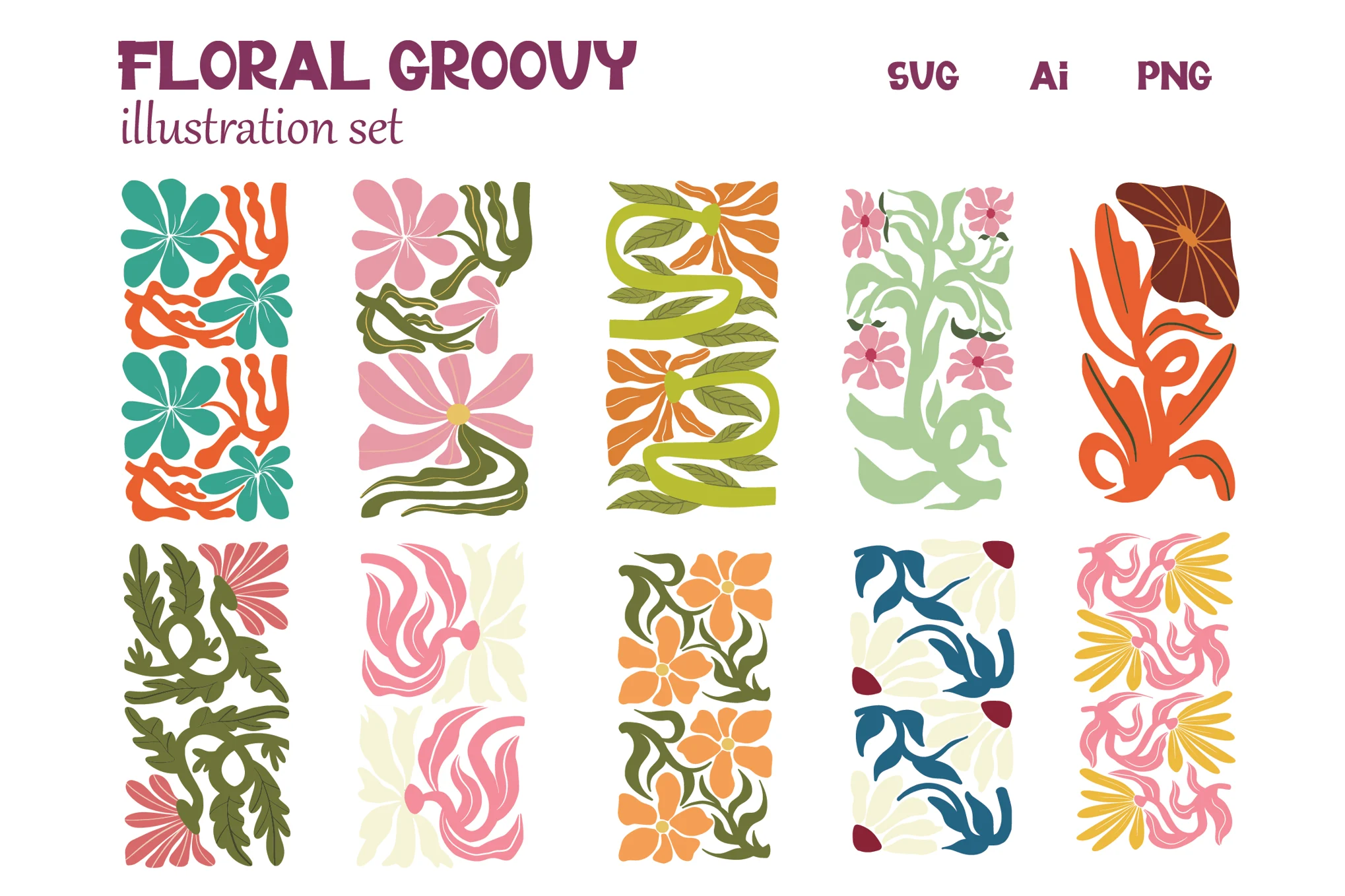
Floral Groovy Illustration

Groovy Botanical Collection

Retro Posters Groovy Flower Market
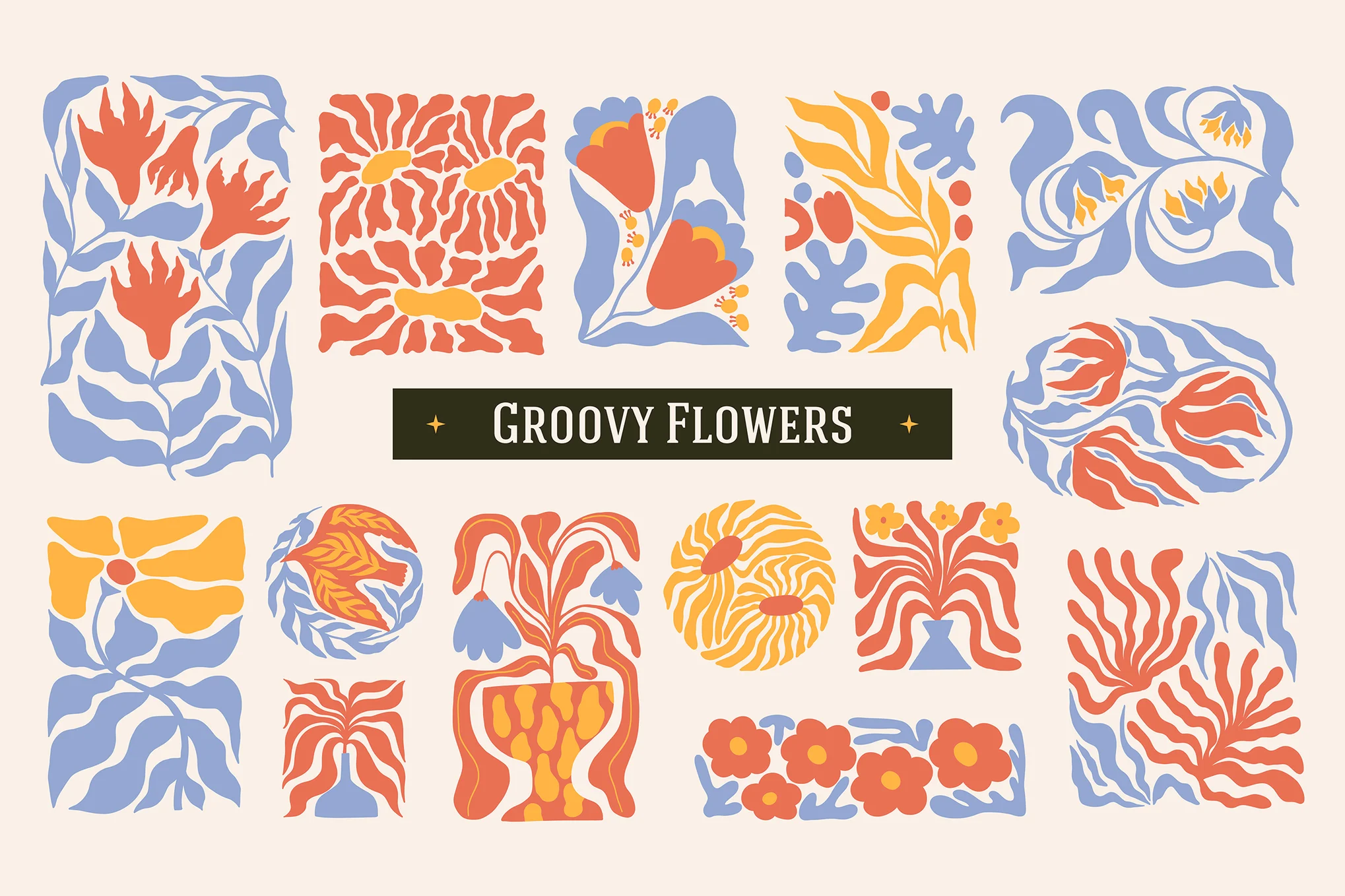
14 Flowers And Leaves Compositions

Retro Floral Groovy Illustration
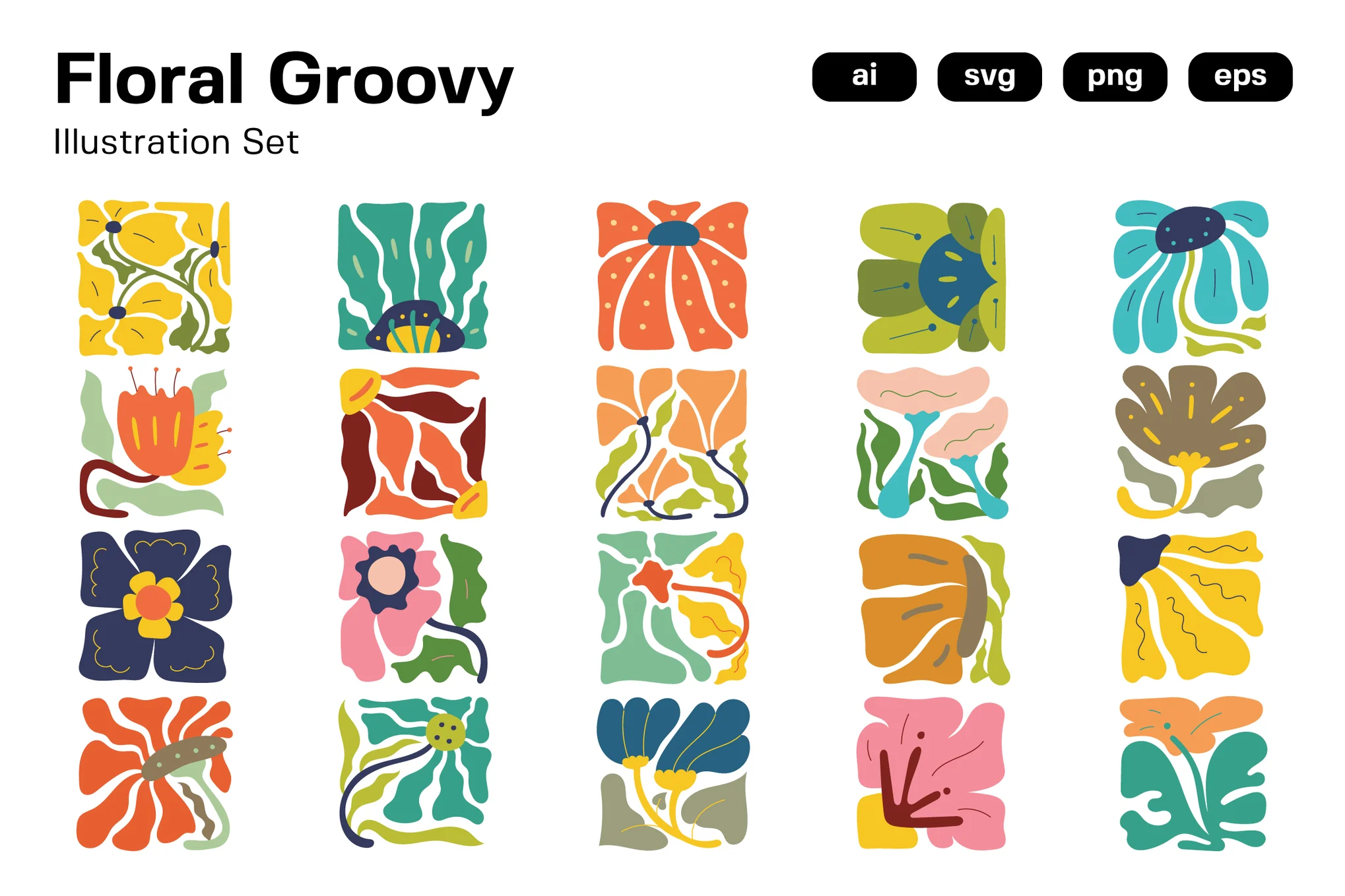
Floral Groovy Illustration – Ai,SVG,PNG,EPS
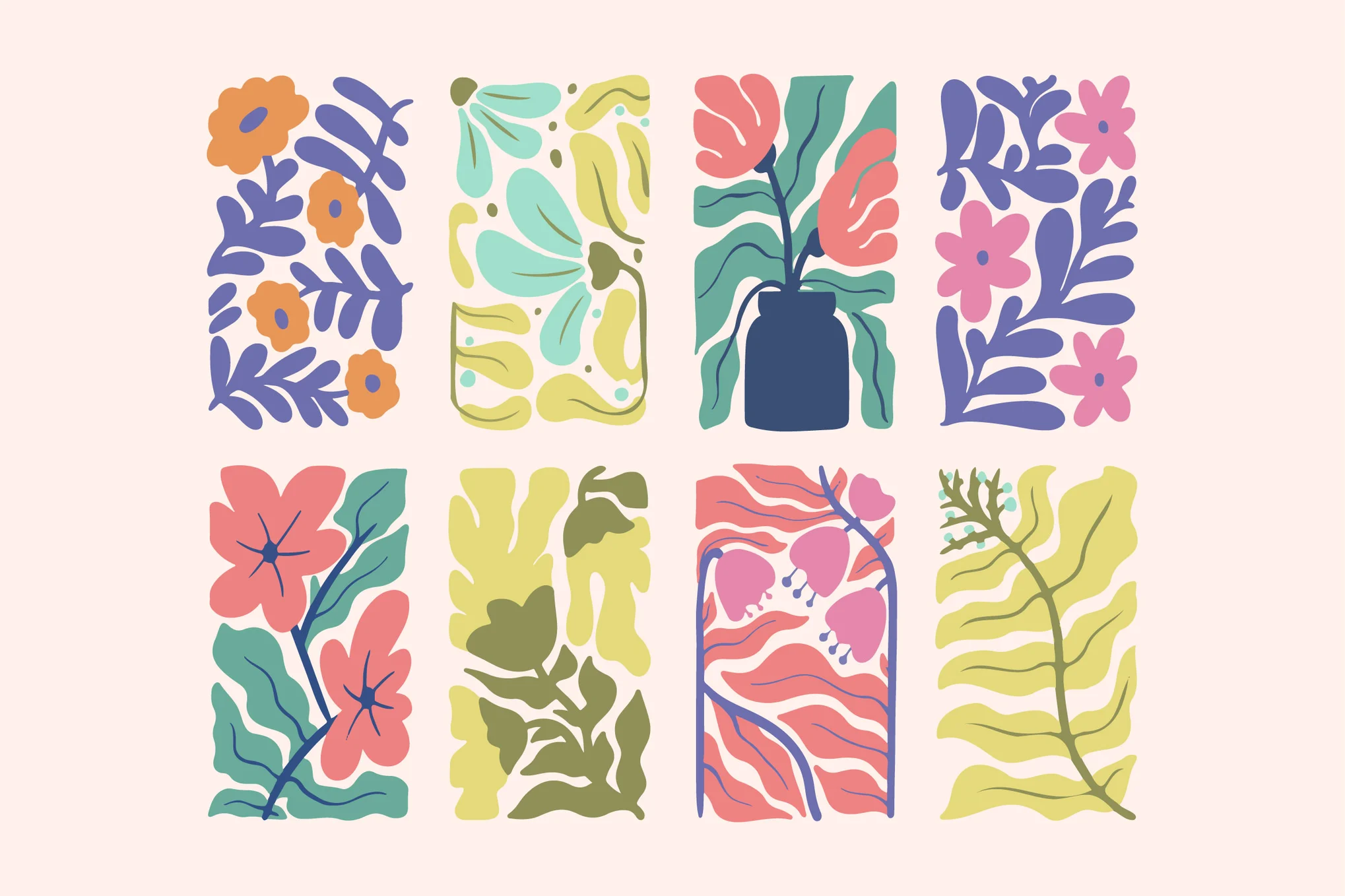
Retro Floral Groovy Illustration

Groovy Flowers Retro
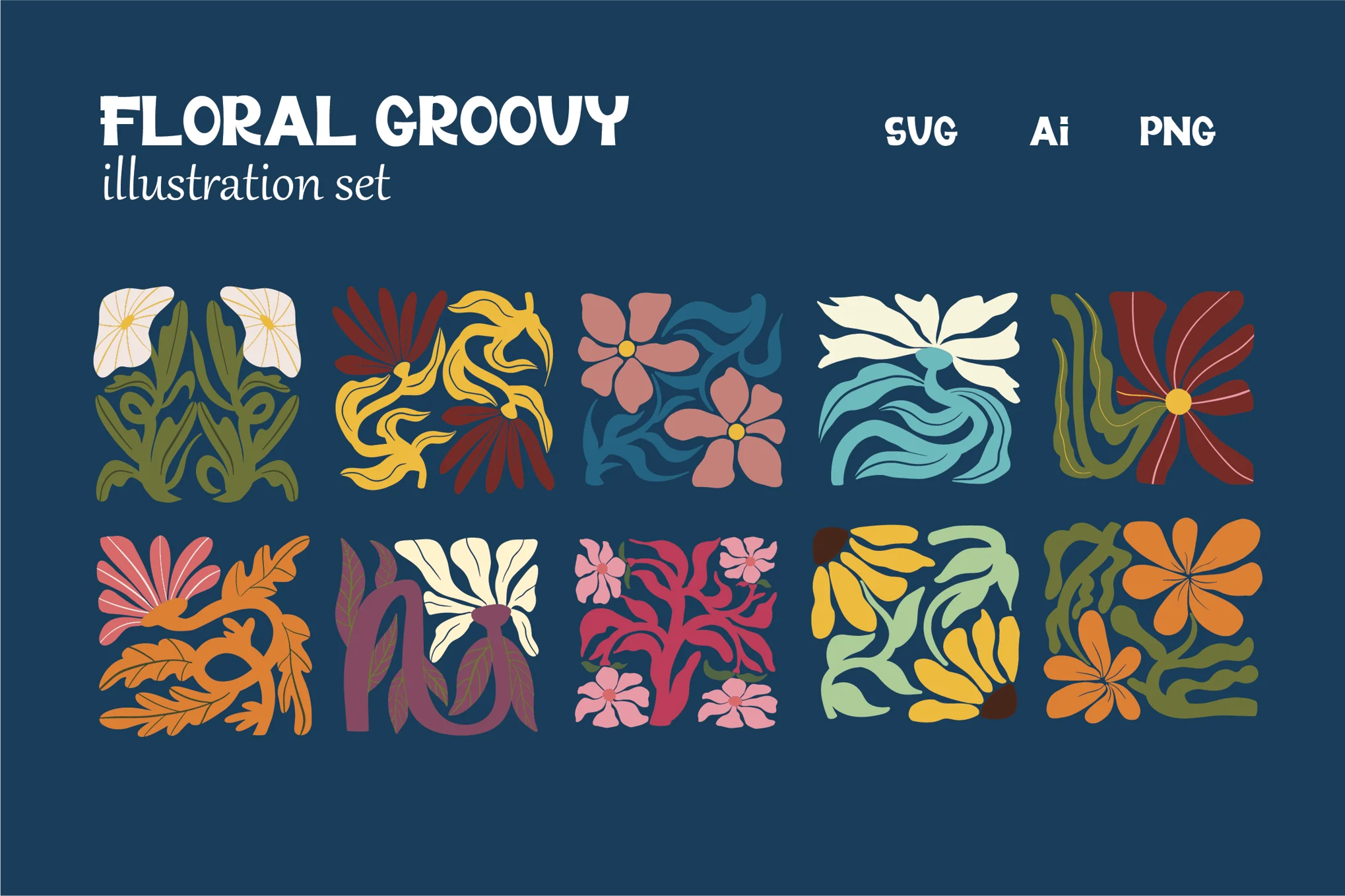
Floral Groovy Illustration Set
Why Groovy Flowers Illustration Is Trending Again
The digital generation is rediscovering the visual joy of retro art. Modern consumers crave authenticity and emotional connection—and groovy flowers deliver exactly that. Their bright hues and organic shapes evoke happiness and nostalgia, providing an antidote to minimalism and monotone design trends that have dominated the past decade.
In addition, the groovy flower illustration trend aligns perfectly with the current focus on sustainability and nature-inspired design. As brands and creatives emphasize eco-conscious messaging, floral and botanical illustrations serve as a natural visual language to express those values. Whether it’s on eco-friendly packaging, wall prints, or digital campaigns, these illustrations celebrate the beauty of nature with a vintage twist.
Elements That Define Groovy Flower Design
The charm of Groovy Flowers Illustration lies in its distinctive artistic elements. Designers often use:
- Vibrant color palettes – Think sunshine yellows, bubblegum pinks, coral oranges, and mint greens. These cheerful tones immediately attract attention and convey positivity.
- Curvy, fluid shapes – The petals, stems, and patterns flow seamlessly, creating a sense of motion and rhythm that’s visually soothing.
- Bold typography and psychedelic patterns – Often combined with funky lettering, wavy text, and geometric backgrounds that complement the floral motifs.
- Textured finishes – To give illustrations a hand-drawn, nostalgic look reminiscent of 70s posters or vinyl album covers.
Together, these elements create a balanced blend of fun, freedom, and artistic flair that feels both retro and refreshingly modern.
How Designers Use Groovy Flowers in Modern Projects
From freelance illustrators to global brands, everyone seems to be embracing the groovy floral aesthetic. Graphic designers use it for poster art, brand logos, stickers, and merchandise that channel vintage vibes. In fashion design, groovy flowers appear on fabric prints, accessories, and even footwear, turning everyday wear into bold statements of style.
On social media, creators and influencers use groovy flower illustrations in digital backgrounds, Instagram templates, and promotional posts to capture attention instantly. Their lively energy makes any content pop, helping brands connect emotionally with their audience.
Even web designers have joined the movement. Instead of flat, sterile interfaces, many websites now feature floral icons, pastel backdrops, and illustrated accents that feel warm and welcoming. This visual approach improves user engagement and enhances brand identity through playful, expressive design.
The Digital Tools Behind Groovy Flowers Illustration
Modern tools like Adobe Illustrator, Procreate, and Affinity Designer have made it easier than ever for artists to recreate retro styles with precision and creativity. Digital brushes can replicate watercolor textures, vintage ink patterns, or grainy poster effects that give groovy flower illustrations a nostalgic authenticity.
Some artists even mix hand-drawn sketches with digital coloring, adding depth and personality to their work. The result is a perfect harmony between vintage aesthetics and modern technology—a timeless design language that appeals across generations.
Emotional Power of Groovy Floral Art
Beyond visuals, groovy flower illustrations carry a deep emotional resonance. Their fluid forms and cheerful tones evoke feelings of joy, optimism, and peace. They remind us of simpler times, where creativity had no boundaries and individuality was celebrated.
In today’s fast-paced digital world, this emotional connection matters more than ever. Whether used in branding, interior decor, or digital campaigns, groovy floral art has the power to uplift moods and inspire creativity.
Incorporating Groovy Flowers into Your Design Work
If you’re a designer or marketer looking to infuse more character into your projects, incorporating Groovy Flowers Illustration can be a refreshing choice. Start by exploring color palettes that reflect warmth and energy. Combine organic floral shapes with wavy patterns or retro typography to build a cohesive theme.
You can also experiment with layering and symmetry to achieve a balanced yet dynamic layout. Whether you’re designing a social media post, an event poster, or a product label, groovy flowers can instantly make your visuals stand out and convey a message of positivity and creativity.
Conclusion: A Timeless Blend of Retro and Modern
The Groovy Flowers Illustration trend is more than a passing design fad—it’s a celebration of color, creativity, and individuality. By merging the soul of the 70s with modern design sensibilities, it offers a unique visual experience that feels both nostalgic and new.
As the world of digital art continues to evolve, groovy flower illustrations will keep inspiring designers to think boldly, color freely, and create with joy. Their timeless appeal proves that creativity, much like nature itself, always finds a way to bloom again.